
The Divine Nine did not emerge from tradition alone. They were built in response to exclusion, inequality and the urgent need for Black community, scholarship and leadership during some of the most difficult periods in American history.
Each of the nine organizations that make up the National Pan-Hellenic Council was founded by Black students who were denied access to white Greek organizations and chose to build something of their own — something that would outlast them by more than a century.
This is the story of how each one began.
Alpha Phi Alpha — 1906, Cornell University
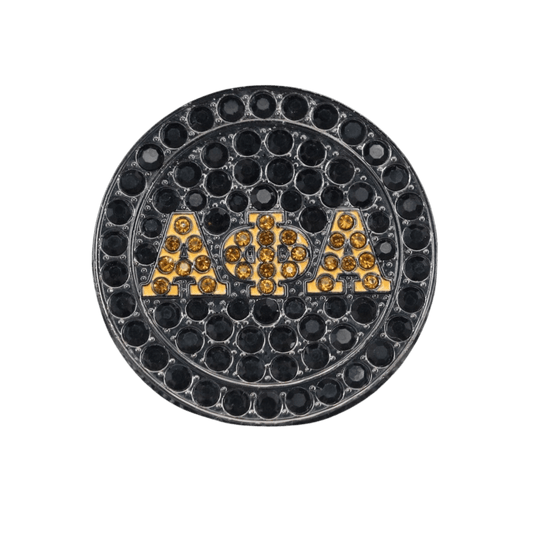
Alpha Phi Alpha is the first Black intercollegiate Greek-letter organization and the oldest member of the Divine Nine.
It was founded on December 4, 1906 at Cornell University in Ithaca, New York by seven students known today as the Jewels: Henry Arthur Callis, Charles Henry Chapman, Eugene Kinckle Jones, George Biddle Kelley, Nathaniel Archie Murray, Robert Harold Ogle and Vertner Woodson Tandy.
Cornell at the time was an isolating environment for Black students. The founders came together initially as a study and support group before establishing a formal fraternity rooted in scholarship, fellowship and service.
Alpha Phi Alpha counts among its members W.E.B. Du Bois, Thurgood Marshall, Martin Luther King Jr. and Jesse Owens. Its motto is "First of All, Servants of All, We Shall Transcend All."
Alpha Kappa Alpha — 1908, Howard University
Alpha Kappa Alpha is the first Black sorority in the United States and the oldest Black Greek-letter organization for women.
It was founded on January 15, 1908 at Howard University in Washington D.C. by Ethel Hedgemon Lyle and sixteen other women, with later contributions from Nellie Quander who helped establish its permanent charter and constitution.
The founders created Alpha Kappa Alpha to promote unity, scholarship and service among Black women at a time when opportunities for Black women in higher education were extremely limited.
The organization's colors are salmon pink and apple green. Its ivy leaf symbol and the phrase "By Culture and By Merit" have defined its identity for more than a century.
Notable members include Maya Angelou, Coretta Scott King, Toni Morrison and Kamala Harris.
Kappa Alpha Psi — 1911, Indiana University
Kappa Alpha Psi was founded on January 5, 1911 at Indiana University in Bloomington, Indiana by Elder Watson Diggs and nine other founders.
Indiana University at the time had a small and isolated Black student population. The founders sought to create a brotherhood centered on achievement and the development of Black men in a hostile academic environment.
The organization adopted the word "Achievement" as its singular guiding principle. Its crimson and cream colors and the iconic cane — used in stroll performances — have become among the most recognizable symbols in Black Greek culture.
Kappa Alpha Psi counts among its members Johnnie Cochran, Tom Bradley and many prominent figures across law, politics and entertainment.
Omega Psi Phi — 1911, Howard University
Omega Psi Phi was founded on November 17, 1911 at Howard University in Washington D.C. by three students — Edgar Amos Love, Oscar James Cooper and Frank Coleman — together with their faculty advisor Ernest Everett Just.
It was the first Black Greek-letter fraternity founded at a historically Black university.
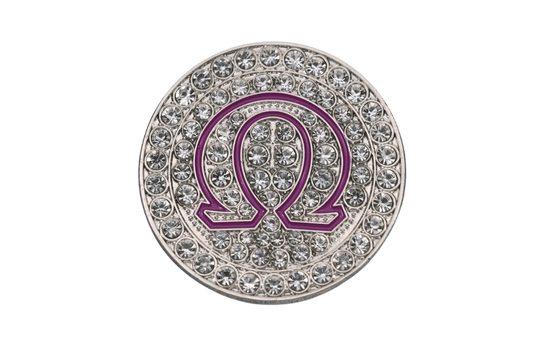
The founders built Omega Psi Phi on four cardinal principles: manhood, scholarship, perseverance and uplift. The fraternity's purple and gold colors and the Omega symbol have become deeply embedded in HBCU culture.
Omega Psi Phi is known for its intense brotherhood, its step show culture and its Founder's Day celebrations. Notable members include Langston Hughes, Michael Jordan, Steve Harvey and Shaquille O'Neal.
Delta Sigma Theta — 1913, Howard University
Delta Sigma Theta was founded on January 13, 1913 at Howard University in Washington D.C. by twenty-two women known as the Founders.
Just five years after Alpha Kappa Alpha was established at the same institution, these women sought to create an organization with a stronger emphasis on public service and political action.
In their first public act as a sorority, the founders marched in the Women's Suffrage March in Washington D.C. on March 3, 1913 — just days after their founding. That act of civic courage defined the organization's identity from its earliest days.
Delta Sigma Theta's crimson and cream colors and its elephant symbol are widely recognized across HBCU campuses. Notable members include Shirley Chisholm, Aretha Franklin, Nikki Giovanni and Ruby Dee.
Phi Beta Sigma — 1914, Howard University
Phi Beta Sigma was founded on January 9, 1914 at Howard University in Washington D.C. by three students: Abner Langston Jackson, Leonard Francis Morse and Charles Ignatius Brown.
The founders established the fraternity on three core principles: brotherhood, scholarship and service. They believed an organization should exist not for its members alone but for the broader benefit of humanity — a philosophy captured in their motto "Culture for Service and Service for Humanity."
Phi Beta Sigma is also notable for being the first Black Greek fraternity to establish an official sister sorority, Zeta Phi Beta, in 1920.
Its royal blue and pure white colors are among the most distinctive in the Divine Nine. Notable members include Huey P. Newton, A. Philip Randolph and James Weldon Johnson.
Zeta Phi Beta — 1920, Howard University
Zeta Phi Beta was founded on January 16, 1920 at Howard University in Washington D.C. by five women known as the Pearls: Arizona Cleaver, Myrtle Tyler, Viola Tyler, Fannie Pettie and Pearl Anna Neal.
It was the first Black Greek-letter sorority to be constitutionally bound to a fraternity, establishing a formal bond with Phi Beta Sigma from its founding.
The founders built Zeta Phi Beta on the principles of scholarship, service, sisterhood and finer womanhood. They envisioned an organization that would challenge mediocrity and encourage higher standards in all areas of life.
Zeta Phi Beta's royal blue and white colors and its dove symbol represent peace and sisterhood. Notable members include Zora Neale Hurston, Esther Rolle and Sheryl Underwood.
Sigma Gamma Rho — 1922, Butler University
Sigma Gamma Rho is unique among Divine Nine sororities in that it was founded at a predominantly white institution rather than an HBCU.
It was founded on November 12, 1922 at Butler University in Indianapolis, Indiana by seven school teachers: Mary Lou Allison Gardner Little, Dorothy Hanley Whiteside, Vivian White Marbury, Nannie Mae Gahn Johnson, Hattie Mae Dulin Redford, Bessie Mae Downey Martin and Cubena McClure.
The founders were educators who wanted to create an organization that uplifted communities through education and service. Their focus on teachers and professional women gave Sigma Gamma Rho a distinct identity rooted in community development from the beginning.
Its royal blue and gold colors and the poodle mascot are recognizable symbols on campuses across the country. The organization's motto is "Greater Service, Greater Progress."
Iota Phi Theta — 1963, Morgan State University
Iota Phi Theta is the youngest of the Divine Nine and the only one founded during the Civil Rights Movement.
It was founded on September 19, 1963 at Morgan State University in Baltimore, Maryland by twelve men known as the Founders, led by Albert Hicks, Lonnie Spruill Jr., Charles Briscoe, Frank Coakley, John Eubanks, Barron Willis, Webster Lewis, Charles Brown, Louis Hudnell, Charles Gregory, Elias Dorsey Jr. and Michael Williams.
Many of the founders were older, non-traditional students — veterans, working adults and community members — which shaped the organization's emphasis on maturity, sobriety and community responsibility.
Iota Phi Theta was admitted to the National Pan-Hellenic Council in 1997, completing the Divine Nine. Its brown and gold colors and centaur symbol represent strength and scholarship. Its motto is "Building a Tradition, Not Resting Upon One."
What the Founding Stories Share
Each of the nine organizations was built in a different city, at a different institution and in a different decade. But they share a common thread.
Black students and educators who were excluded, overlooked or underestimated chose to build structures of brotherhood and sisterhood that would support, challenge and elevate Black communities for generations.
The Divine Nine were not founded for social status. They were founded for survival, solidarity and service.
That foundation is why they remain relevant on every HBCU campus today and why their history deserves to be understood — not just celebrated.
Learn More
If you want to go deeper on any individual organization, visit their official national websites. For HBCU culture, Greek life gear and community resources, explore our store for more.
Disclaimer: This article is intended for educational purposes and provides a general historical overview of each organization. It is not affiliated with or endorsed by the National Pan-Hellenic Council or any individual Divine Nine organization. For official historical records and membership information, visit each organization's national website directly.